

How to Choose a 10 kV Amorphous Alloy Transformer: Sizing Method and Capacity Matching
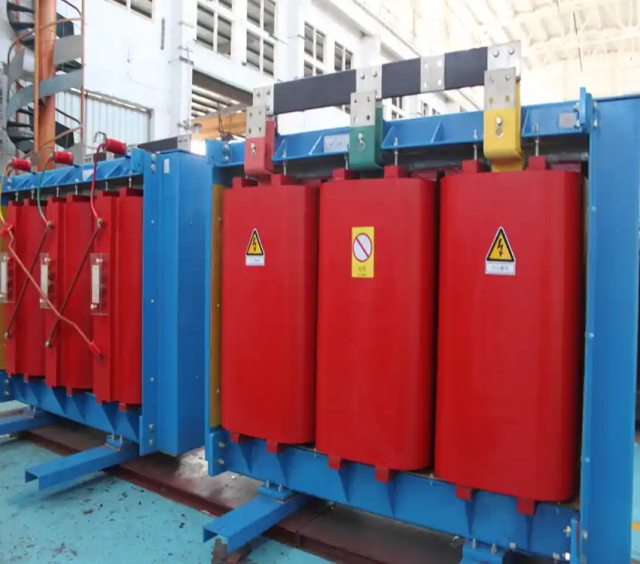
On grid upgrades, commercial and industrial distribution, solar-plus-storage projects, and municipal work, the 10 kV amorphous alloy transformer has been steadily replacing the conventional silicon-steel unit. The reason is simple: much lower no-load loss, lower energy waste, and stable day-to-day operation. That combination has made it the default pick wherever a Grade 1 efficiency distribution transformer is specified.
The problem is that sizing is where most projects go wrong. Pick too much capacity and you burn budget on kVA you will never use. Pick too little and you get overloaded equipment, high temperature rise, and nuisance trips. Pick the wrong model for the site and you fight the installation for the next twenty years. This guide covers the selection method and the capacity-matching math so you can hit safety, efficiency, and cost at the same time — whether you are feeding a rural feeder, a factory, or a PV plant. Our 10 kV amorphous alloy transformer line is the reference point for most of what follows.
1. Four Principles Behind Any 10 kV Amorphous Alloy Selection
Every good specification comes down to the same four things: fit the site, hit the efficiency tier, size the capacity correctly, and save money over the life of the asset. In China, this aligns with the DL/T 1813 selection guide for distribution transformers ([Confirm] confirm the current edition and the equivalent DOE 10 CFR 430 or ANSI/IEEE C57.12 requirements for your market).
Match the type to where it will live
The market splits into two families, and they are not interchangeable:
- Oil-immersed — the SH15 and newer SH21 series. Better heat dissipation, stronger weather resistance, and a lower price tag at the same rating. This is the right answer for pole-mounted units, substation yards, and rural grid rebuilds.
- Dry-type cast resin — the SCBH15, SCBH18, and newer SCBH25 series. No oil means no fire load and no containment pit, which is why it is what you want inside a building.
Indoor switchgear rooms, shopping centers, hospitals, data centers, and any occupied or densely populated space should use a dry-type amorphous unit such as the SCBH15 amorphous alloy dry-type transformer — no fuel hazard, fire-safe, and essentially no fluid maintenance. If you are still on the fence between the two technologies, our guide on oil-immersed vs dry-type transformers walks through the trade-offs.
Verify the efficiency tier before you compare prices
Amorphous cores run well ahead of conventional silicon steel. SH15 and SCBH15 are the proven energy-saving models; the newer SH21 and SCBH25 reach Grade 1 efficiency, with no-load loss running at roughly [Confirm] 30% of a comparable silicon-steel transformer. Because a distribution transformer is energized around the clock, that saving accrues 8,760 hours a year, which is what makes amorphous the easy call for low-carbon campuses and legacy grid retrofit programs. If Grade 1 efficiency is written into your spec, also look at our SCB18 Grade 1 cast resin dry-type range for indoor duties where amorphous is not mandatory.
Confirm the voltage class
The standard build is 10 kV primary / 0.4 kV secondary, which covers the overwhelming majority of commercial, industrial, and municipal distribution in China. One caveat for North American readers: US utility primary distribution typically runs at 12.47 kV or 13.8 kV, not 10 kV. The amorphous platform is available in those ratings too — specify whatever your utility or switchgear actually delivers.
2. Capacity Matching: Do the Math Once, Do It Right
Capacity is where the money is. Undersize and you get overload, excessive temperature rise, frequent tripping, and a shortened service life. Oversize and the load factor drops so low that you pay for losses and capital you will never recover.
The formula used across the industry:
Transformer rating (kVA) = total load (kW) ÷ power factor × safety margin
Power factor is normally taken as 0.8 unless you have measured data. The safety margin depends on the application:
- 1.2–1.3 for general commercial/industrial loads and residential community distribution.
- 1.3–1.5 for PV, battery storage, and heavy industrial equipment, where you need headroom for starting inrush and for future expansion.
Worked example. A plant has 480 kW of connected load at a 0.8 power factor with a 1.25 margin: 480 ÷ 0.8 = 600 kVA, × 1.25 = 750 kVA. Round up to the next standard rating — 800 kVA.
Then check the load factor. Amorphous alloy transformers are at their best between [Confirm] 30% and 60% loading, where combined no-load and load losses bottom out and the energy savings are largest. If your calculated load lands below 30% of the rating you picked, step down a size.
Here is the quick-reference mapping most buyers work from:
Standard rating |
Typical applications |
Approximate load served (kW, PF 0.8, margin 1.25) |
|---|---|---|
100–315 kVA |
New rural distribution, municipal street lighting, small retail |
65–200 kW |
400–800 kVA |
Residential blocks, small and mid-size factories, schools and hospitals |
255–510 kW |
1,000–1,600 kVA |
Industrial parks, commercial complexes, PV plants |
640–1,025 kW |
2,000–2,500 kVA |
Large factories, data centers, storage stations |
1,280–1,600 kW |
A 1,250 kVA unit deserves a special mention: it is the workhorse for mid-size plants and large commercial blocks, and a representative build is shown on our 1,250 kVA amorphous alloy transformer page. At the top end, ratings of 1,600 kVA and above are usually oil-immersed — see our 1,600 kVA and 2,000 kVA oil-immersed units for industrial distribution for what that class looks like.
3. Selection by Scenario, and the Mistakes to Avoid
Legacy grid retrofit. Go with an SH15 oil-immersed amorphous unit. You are replacing high-loss equipment that runs lightly loaded most of the day, so the whole business case rests on cutting baseline no-load loss — and that is exactly where amorphous pays back fastest.
Solar, wind, and storage. Size the amorphous package substation at roughly [Confirm] 1.25 times the generating capacity to handle intermittent output without wasting generation. Our guide to step-up transformers in renewable energy covers the design features renewable duty demands, and you can see one in service in our 50 MW solar PV plant project.
Indoor or critical-power distribution. Specify an SCBH15 dry-type amorphous unit. Low noise, low temperature rise, strong short-circuit withstand, and no maintenance — it suits a sealed switchgear room where oil leakage and fire risk are simply not acceptable.
Three pitfalls worth calling out:
- Do not buy capacity you will not use. A transformer that sits at 15% loading wastes capital [Confirm] and efficiency. Size to the load study, not to a guess.
- Do not mix in off-spec, low-price units. Check the manufacturer's qualifications and test reports, and verify the nameplate against what was promised — our field guide to reading a transformer nameplate shows which parameters to check. Substandard builds are the fastest route to a failed utility acceptance inspection.
- Do not ignore the environment. In humid, dusty, or coastal outdoor sites, order the corrosion-protected, reinforced enclosure. For exposed locations where you still want cast resin, an outdoor enclosed dry-type transformer is the purpose-built option.
4. FAQ
How do I size a 10 kV amorphous transformer if I only know my load in kW?
Divide your total connected load in kW by the power factor (0.8 is the usual assumption), then multiply by a safety margin — 1.2–1.3 for standard commercial and community loads, 1.3–1.5 for solar, storage, or heavy industrial equipment. Round the result up to the next standard kVA rating, then sanity-check that your normal loading falls somewhere in the 30–60% sweet spot.
Is it really a problem to oversize "just to be safe"?
Yes, and it costs you twice. You pay more upfront for kVA you never use, and a transformer running at very low load factor does not operate at its most efficient point, so you give up part of the reason you bought amorphous in the first place. Leave sensible headroom for growth — 20–30% is plenty — rather than doubling the rating.
How much will an amorphous core actually save versus silicon steel?
No-load loss typically comes in at roughly [Confirm] 30% of a comparable silicon-steel unit, and because the transformer is energized continuously, that saving runs all 8,760 hours of the year. On a lightly loaded feeder — exactly the case in rural grids and retrofit projects — no-load loss dominates total losses, so the payback on the amorphous premium is usually a matter of a few years, after which it is straight savings for the remaining life of the asset.
Which model should I use inside a building?
A dry-type cast resin amorphous unit — SCBH15 for standard duty, SCBH18 or SCBH25 if you need Grade 1 efficiency. With no insulating oil there is no fire load, no containment pit, and no fluid maintenance, which is what building codes and insurers want to see in occupied spaces. Oil-immersed SH15 or SH21 belongs outdoors, on poles, or in substation yards.
What about solar or battery storage projects?
Size at about [Confirm] 1.25 times the inverter or generating capacity so that intermittent output is not clipped, and specify inverter-duty construction to handle harmonic-rich waveforms. Amorphous makes particular sense here because renewable plants spend a lot of time at partial output, where low no-load loss matters most.
Does any of this apply to a project in the United States?
The physics and the sizing method are identical, but the voltage is not. US primary distribution is commonly 12.47 kV or 13.8 kV rather than 10 kV, and you will be specifying to ANSI/IEEE C57.12 instead of IEC 60076 or GB standards. Amorphous cores are available across those ratings — just state the actual primary voltage and the applicable standard on your inquiry.
Repost this post?
Share with your followers.
Reply